
Views: 0 Author: Site Editor Publish Time: 2026-05-06 Origin: Site


You can sort automotive moulds by what they do and how they are made. The car industry uses a few main types:
Type of Mold | Description |
|---|---|
Punching and Cutting Die | Used for cutting; includes shearing die, blanking die, and punching die. |
Bending Mold | Bends flat pieces into angles; includes regular bending dies and cam bending dies. |
Pumping Mold | Makes seamless containers from flat blank embryos. |
Forming Mold | Changes the shape of blanks by local deformation; includes different forming die types. |
Compression Mold | Uses strong force to change metal wool embryos into shapes; includes extruded dies. |
Knowing how automotive moulds are sorted helps you make better products, work faster, and save money. New moulding methods let you build lighter and stronger parts, which are important for today’s cars.
Learn about the types of automotive moulds. These include injection, compression, and extrusion. This helps you pick the best one for your project.
Injection moulds are good for making lots of parts. They help make car parts quickly and accurately.
Taking care of moulds often makes them last longer. This can make them last up to 30% more. It saves money and helps make parts better.
Think about the environment when choosing moulds. Using recyclable materials cuts down on waste. It also helps protect the planet.
Always use industry rules for mould classification. This keeps car parts safe and high quality.
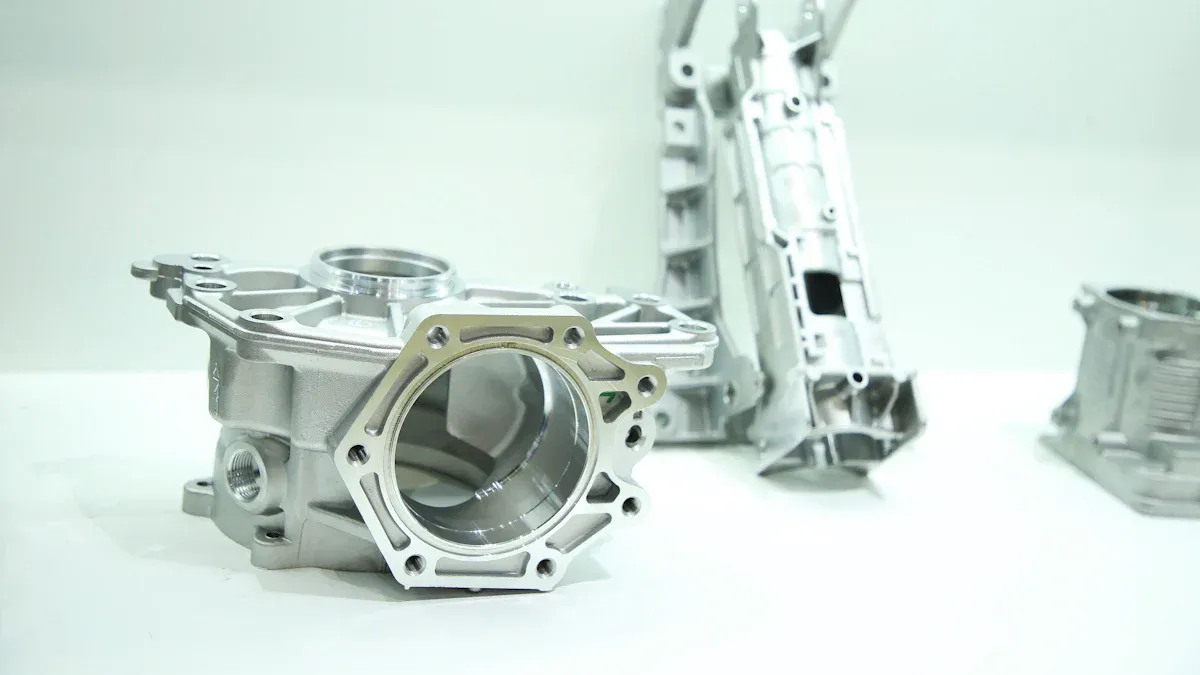
Injection mold classifications are important in making car parts. These molds help make many parts fast and with great accuracy. You can sort injection molds by how they are built, what they are made of, and how they work. The injection molding process uses machines to shape plastic into car parts. These molds can make thousands of parts without losing quality.
Characteristic | Description |
|---|---|
High Production Efficiency | The injection mold uses a mechanical process that allows for quick and efficient mass production. |
High Precision | Advanced CNC technology ensures high accuracy in mold structure and product size. |
Low Structural Complexity | Simple structure facilitates easy manufacturing and maintenance, reducing production costs. |
Strong Material Plasticity | Flexibility in using various plastic materials with different properties for diverse applications. |
Long Mold Life | Made from high-quality steel, these molds have good wear resistance and longevity. |
Design Principles | Ensures durability and optimal performance in vehicle manufacturing. |
You use injection mold classifications to make different types of car parts. Straight injection molding makes things like junction relay boxes and seat belt parts. Insert molding is used for sensor housings and switch parts. Multishot molding helps make rain sensors, light sensors, and pedal arms.
Injection Molding Type | Examples of Automotive Parts |
|---|---|
Straight Injection Molding | Junction relay boxes, seat belt retractor mechanism components, electronic enclosures |
Insert Molding | Sensor housings, switch components, automotive electronic housings |
Multishot Molding | Rain and light sensors, pedal arms, instrument bezels |
You pick the right injection mold to get good quality and fast production. Injection molding helps the car industry by making parts that are light and strong.
Compression molds shape materials using heat and pressure. There are a few steps to make strong and stable parts. First, you clean and heat the mold. Next, you cut and weigh the material. You put the material in the mold and press it tight. The material gets hard during curing, and cooling makes it stable. At the end, you take out the part and remove extra material.
Step | Description |
|---|---|
Mold Preparation | Clean the mold, add a release spray, and heat it up. |
Charge Preparation | Get the material ready by cleaning, cutting, weighing, and preheating it. |
Charge Loading | Put the material into the bottom mold for even pressing. |
Compression | Close the mold tightly to press the material into shape. |
Curing | Use heat or chemicals to harden the material permanently. |
Cooling | Let the mold cool down to make the product stable. |
Ejection | Take out the finished part from the mold by hand or machine. |
De-Flashing | Cut off extra material that squeezed out during pressing. |
Compression molds are used to make door panels, dashboards, and engine parts. These molds give a smooth surface and strong shape. You see them in body panels, inside doors, and engine parts like air ducts and valve covers.
Door panels
Dashboards
Parts for engines
Compression molding is good for parts that need to be strong and steady. The hot process makes the material soft so it fills the mold well.
Extrusion molds make long or special-shaped car parts. The process is simple and has a few steps. First, you add things to the main material as needed. Then, you melt the material and mix it with a screw to make it soft. The melted material comes out of the barrel and gets shaped. The pressure and purity stay the same.
Extrusion molds are used for weather strips, seals, and trim. These molds make long shapes that fit many parts of a car. You also use extrusion molds for plastic tubes, profiles, and other long or bendy parts.
There are other types of automotive moulds too. Die-casting molds make metal parts like aluminum housings. Stamping molds shape metal sheets for body panels and brackets. These molds are used for parts that must be strong and exact.
Type of Mold | Primary Applications |
|---|---|
Injection Mold | Used for making plastic products like car body panels. |
Die-Casting Mold | Used for manufacturing metal products like aluminum parts. |
Extrusion Mold | Used for creating long or special-shaped plastic products. |
The car industry uses many kinds of molds for different needs. You pick the right mold based on the material, shape, and how many you need. There are new trends, like using lighter materials and better technology. Electric cars need special molds for battery cases and high-voltage parts. You also see multi-material molds and molds for sensors and driver-assist systems.
Tip: You should think about the environment when picking automotive moulds. Companies now use green materials, recyclable plastics, and try to make less waste.
Where you are in the world changes how molds are sorted. North America uses new tools and digital systems. Europe cares about the environment and high quality. Asia-Pacific grows fast with new technology. Latin America and the Middle East spend money on new projects and smart cities.
Taking care of molds and treating their surfaces helps them last longer. How long a mold lasts depends on how often you use it and how you care for it. A coated mold with good care lasts about 30% longer than one without treatment.
There are problems in mold classification, like checking quality, managing supplies, cost, time, and tricky designs. Digital tools and machines help make molds better and let you watch and improve the process as you work.
Automotive molds change as new materials and technology come out. Better steels, special alloys, and beryllium copper inserts make molds work better and faster. Using green materials and recycling is important for the planet.
You use mold classification to make better choices for car molds. Knowing about the types and features of each mold helps you make better parts, save money, and work faster.
Automotive moulds are different because of how they work. Injection molding melts plastic and shapes it into detailed parts. Compression molds use heat and pressure to make strong pieces. Extrusion molds make long shapes like seals and trim. Die-casting molds create metal parts that are strong and last a long time. Stamping molds cut and shape metal sheets for car bodies. Each mold type helps the car industry in its own way. You pick a mold by looking at the part’s shape, what it is made of, and how many you need. This way, you can match the right process to your project.
Automotive injection molds are important for making car parts. They are used for dashboards, bumpers, and small switches. Injection molding lets you make complex shapes with great detail. Insert molding puts metal or electronic parts inside plastic. This helps make sensor housings and switch covers. These molds help make custom plastic parts for many car needs. When you want strong, light, and detailed parts, you use plastic parts molding. A custom injection molder can help you design parts that fit just right.
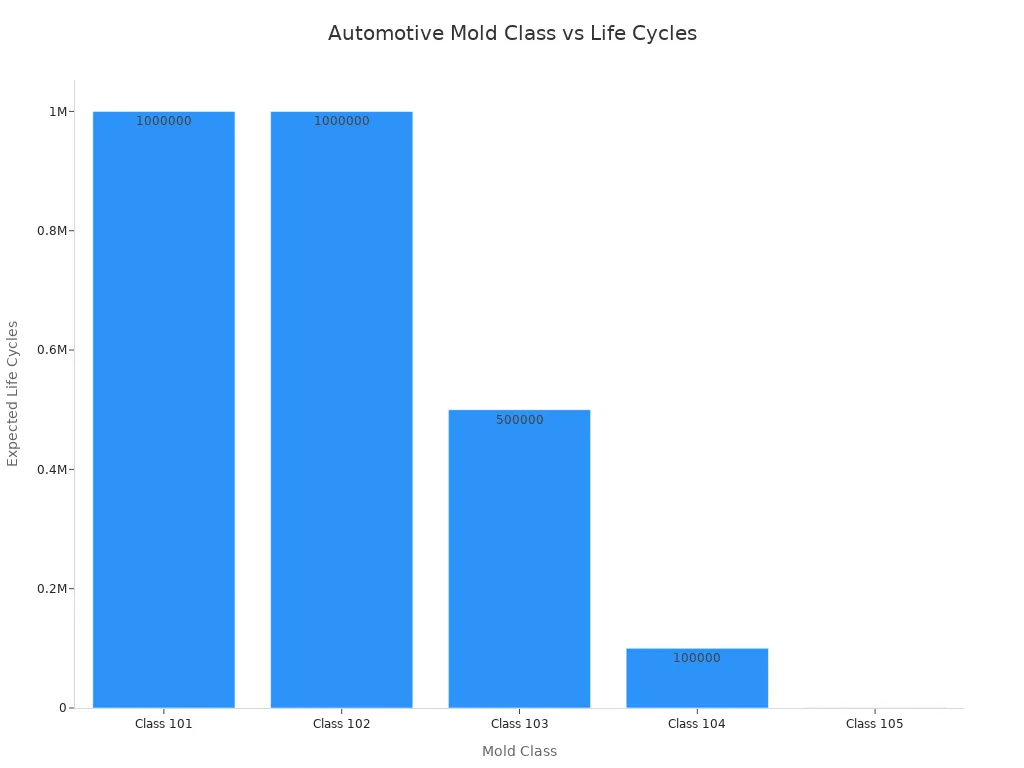
Note: Injection mold classifications change how you design and make car parts. Here are the main classes you might use:
Class 101: Used for making lots of parts that must last and work well.
Class 102: Good for medium or high numbers of parts and balances cost and quality.
Class 103: Works for medium amounts and simple parts.
Class 104: Used for small numbers or test parts.
Class 105: For testing ideas and early designs.
You need to think about how fast and good your parts are when picking automotive molds. High-volume molds are best for making lots of parts. Medium to high-volume molds save money and keep good quality. Prototype molds let you try new ideas before making many parts. Insert molding lets you mix different materials in one part. The car industry needs molds that are fast, reliable, and flexible. Picking the right mold helps you make better car parts. Mold classification helps you choose the best mold for your time and budget.
You need to know about industry standards when you work with automotive moulds. These standards help you make sure every part meets safety and quality rules. In the United States, the SPI (Society of the Plastics Industry) sets classes for molds. You can use these classes to pick the right mold for your project. For example, Class 101 molds last the longest and work best for high-volume jobs. Class 105 molds are for testing and short runs. When you follow these standards, you help your team avoid mistakes and keep costs under control. Many companies in the automotive industry use these standards to make sure their parts fit and work well.
You should look at many factors before you choose a mold for your project. The table below shows what you need to check:
Criteria | Description |
|---|---|
Manufacturing Capabilities | Check if the company has the right machines and can handle big orders. |
Make sure they inspect parts and follow industry rules. | |
Material Options | See if they offer the plastics or metals you need. |
Technical Expertise and Support | Find out if they can help you with design and answer questions. |
Production Capacity and Lead Times | Ask how fast they can make parts and if they can make more if you need them. |
Cost Competitiveness | Compare prices, but also think about quality and service. |
You also need to think about how many parts you want to make. If you need only a few parts, you can use molds made from aluminum or soft steel. These cost less and work well for small jobs. If you need thousands or even hundreds of thousands of parts, you should pick molds made from hard tool steel. These last longer and can handle lots of use. The right material helps you save money and get the best results.
When you choose a mold, you also need to think about the type of part, how strong it needs to be, and how fast you need it. Picking the right mold helps you meet your goals and keeps your project on track.
Tip: Always talk to your mold maker about your project needs. Good communication helps you avoid problems and get the best parts for your car.
When you know about automotive mould classifications, you can do better in the car industry. Here are the main benefits:
Benefit | Description |
|---|---|
Cost-Effective Mass Production | You can make lots of parts fast with less waste and lower worker costs. |
Consistency and Quality Control | All parts look the same and last long, so you get good quality. |
Design Flexibility and Complexity | You can make tricky shapes and put parts together in new ways, so you have more design choices. |
Lightweight Material Options | You can use lighter stuff that is still strong, which helps cars use less fuel. |
Rapid Prototyping and Production | You can test ideas and make changes quickly, so you finish faster. |
Picking the right mold helps you make better parts and work faster. You also save money by checking molds often and taking care of them. Always pick a mold that fits the rules and your project to get the best results.
You use automotive moulds to shape materials into car parts. These moulds help you make parts quickly and with the same quality every time. They are important for making safe and reliable vehicles.
You look at the part’s shape, material, and how many you need. You also check if the mould can handle your production speed. Talking with your mould maker helps you make the best choice.
You keep moulds clean and in good shape to make sure they last longer. Regular care helps you avoid defects and keeps your parts looking and working well.
You can use plastics, metals, and rubber in automotive moulds. The material you pick depends on the part’s job and where it goes in the car.
Mould classification lets you pick the best process for each part. This helps you save money, work faster, and make better products in the automotive industry.


