
Views: 0 Author: Site Editor Publish Time: 2026-05-06 Origin: Site


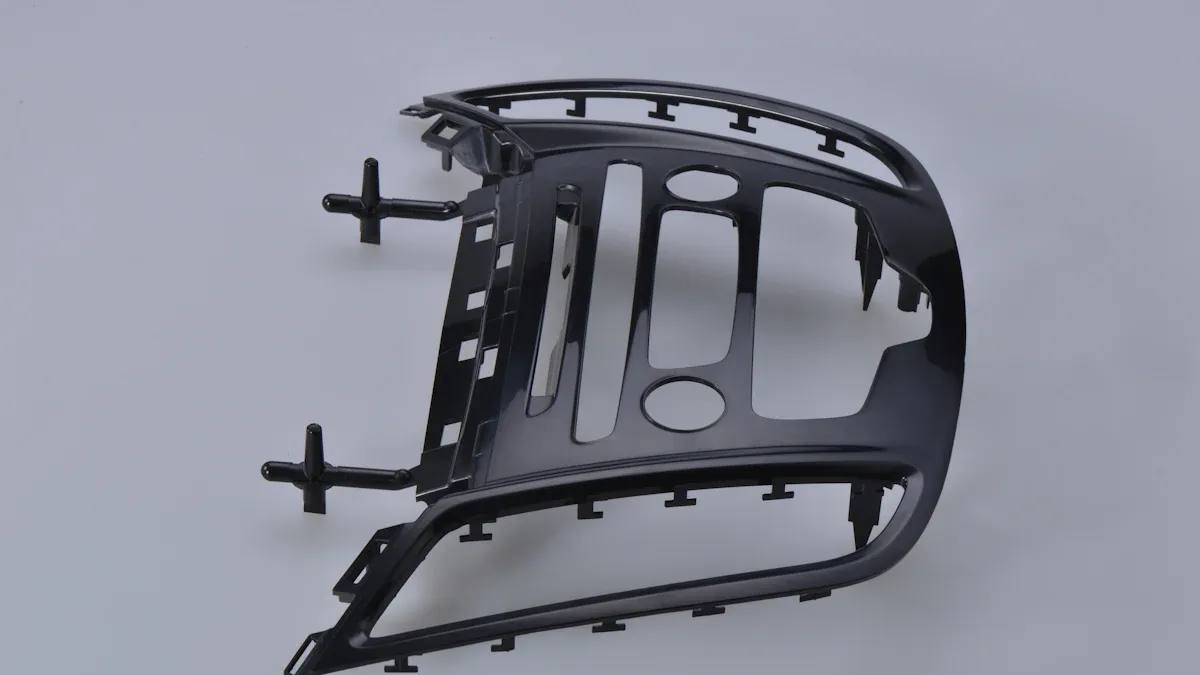
Automotive injection molding makes many parts in cars. This process uses high pressure to shape plastic. It creates strong and exact parts for cars. You get benefits because this method helps make lots of parts quickly. It also gives the same quality in every part.
Aspect | Description |
|---|---|
Cost Reduction | Plastic injection molding cuts waste and lowers costs. |
Speed of Production | The process lets factories make parts fast. |
Design Flexibility | It allows for tricky shapes and more choices. |
Sustainability | It uses less energy and makes less waste. |
Automotive injection molding gives you good parts fast and for less money.
Automotive injection molding makes strong and accurate parts fast. It is cheaper, so car makers like to use it.
The process has four main steps: clamping, injection, cooling, and ejection. Each step is important for good quality and speed.
Picking the right material matters a lot. The best plastic makes car parts last longer and look better. It also helps them work well.
Injection molding lets companies make parts with tricky shapes. This helps them build new and useful car parts.
Quality control is very important. Checking parts often during making keeps standards high and cuts down waste.
Automotive injection molding helps make many car parts. There are four main steps in this process. Each step helps make strong and good parts for cars.
The first step is clamping. The machine closes the mold very tight. The clamping unit holds both halves together. This keeps the mold closed so plastic does not leak out. A strong force is needed to keep it shut. Small parts need less than 5 tons of force. Most parts use about 4 to 5 tons. Some special jobs need over 9,000 tons. The clamping unit helps stop problems like flash or short shots.
Tip: The clamping force should fit the part’s size and type. Too little force causes problems. Too much force wastes energy.
Tonnage (tons) | Application |
|---|---|
Less than 5 | Small parts |
1.8 to 7.2 per cm² | General products |
Over 9,000 | Specialized operations |
Next is injection. Hot plastic is pushed into the mold. The machine uses high pressure to do this. You control how fast and hot it goes. This step shapes the plastic inside the mold. If you go too fast or slow, you get problems. Injection changes how strong and nice the part looks. You must keep things steady for good parts.
Stage | Description | Contribution to Quality |
|---|---|---|
Injection | Molten plastic is injected into the mold cavity under controlled conditions. | Affects the density, strength, and appearance of the final product; improper injection can lead to defects. |
After injection, the plastic cools inside the mold. Cooling is a big part of the process. The plastic gets hard and takes the mold’s shape. Cooling time matters a lot. If you cool too fast, the part can bend or twist. If you cool too slow, you waste time and money. Cooling can take up most of the cycle time. You need to balance speed and quality.
Cooling time changes the size and strength of the part.
Shorter cooling saves money in car making.
If you take parts out too soon, you get problems.
Note: A good mold design helps parts cool faster and stay strong.
The last step is ejection. The machine opens the mold and pushes the part out. Smooth ejection keeps the part safe. If you take it out too soon, it can bend or shrink. If you wait too long, you slow down the work. Ejection changes how fast and good the parts are made.
Stage | Description | Contribution to Quality |
|---|---|---|
Ejection | The finished part is removed from the mold. | Impacts production efficiency and quality; smooth ejection reduces waste and rework. |
You need to think about some things to get the best results.
You pick materials based on how the part will be used. Some plastics look smooth. Others are strong against hits or heat. You choose for UV, water, and electric needs. You also check cost and cooling speed.
Key Factor | Description | Example Usage |
|---|---|---|
Aesthetic Finish | Materials like ABS provide a smooth, polished surface. | ABS in dashboards for sleek appearance. |
Impact Resistance | Polycarbonate ensures durability against drops and shocks. | Polycarbonate in safety equipment. |
UV Resistance | ASA resists sunlight for exterior parts. | ASA in automotive trims. |
Moisture Resistance | PBT prevents failures in wet environments. | PBT in electrical connectors. |
Electrical Insulation | Nylon insulates electrical parts. | Nylon in circuit breakers. |
Cycle Time Efficiency | HDPE allows faster production. | HDPE in high-volume manufacturing. |
Tooling Requirements | PEEK needs special tools for high temperatures. | PEEK in engine parts. |
Material Cost vs. Performance | PC/ABS blends balance cost and quality. | PC/ABS in general automotive parts. |
Molds are made to help parts be strong and easy to make. Thick walls take longer to cool. Sharp corners can make weak spots. Rounded edges help flow and strength. Ribs give extra support. Draft angles help parts come out easily. The right finish makes parts look and work better.
Design Factor | Impact on Efficiency and Quality |
|---|---|
Wall Thickness | Thick sections lead to longer cooling times. |
Corner Design | Filleted edges improve flow and strength. |
Rib and Gusset Placement | Good ribs add support without hurting looks. |
Undercuts | Complex undercuts increase tooling costs. |
Draft Angles | Proper draft prevents damage and tool wear. |
Material Selection | Material choice affects strength and durability. |
Tolerances | Good tolerances ensure part quality and fit. |
Surface Finish | Surface finish affects appearance and function. |
Parts are designed to be easy to mold and strong. Sharp corners and thick walls are avoided. Ribs and gussets are added for support. Draft angles help parts come out of the mold. Tolerances are checked so parts fit well.
You plan how many parts you need to make. Making lots of parts needs fast cycles and strong molds. You pick materials and designs that help you make many parts quickly.
You check each part for problems after every cycle. You look for bending, shrinking, and surface marks. Tools help check if parts meet the rules. Quality control keeps the process working well.
Tip: Good quality checks help stop waste and keep customers happy.
Automotive injection molding is used to make many car parts. Every step and choice helps make strong and good parts for cars.
Plastic injection molding gives car makers many big benefits. This process helps make lots of parts for less money. It also makes parts that are very exact and good quality. You can make tricky shapes with this method. Most cars on the road use parts made this way.
Plastic injection molding helps you save money. The cost to set up and make tools is spread out over many parts. When you make more parts, each one costs less. This is why car companies like this process.
When you make more, each part costs less.
You can make more parts if you need them without spending a lot more.
The setup cost is shared by all the parts, so each one is cheaper.
This way, you can make lots of good parts for less money. You get more for your money when you use this process in car factories.
Injection molding makes the same part every time. The molds and machines are very exact. Every part comes out just like the last one. This is important for car safety and how well cars work.
All the parts are almost the same. This helps cars work right and keeps people safe. You can trust that every part will fit and do its job. This also helps factories waste less and work faster.
You can pick from many plastics for car parts. Each plastic has its own strengths and uses. This means you can choose the best one for each part.
Polypropylene (PP): Light, strong, and does not get hurt by chemicals. Used for bumpers and inside trim.
Acrylonitrile Butadiene Styrene (ABS): Tough and does not break easily. Good for dashboards and covers.
Polycarbonate (PC): Very strong and clear. Used in lights and safety gear.
Nylon (PA): Strong and lasts a long time. Used in gears and engine parts.
High-Density Polyethylene (HDPE): Tough and does not get hurt by chemicals. Used in many car parts.
Polyoxymethylene (POM): Hard and smooth. Used in small gears.
Polymethyl Methacrylate (PMMA): Clear and hard to break. Used in windows and screens.
Polyetheretherketone (PEEK): Super strong and does not get hurt by chemicals. Used in special car parts.
Aspect | Description |
|---|---|
Regulatory Requirements | The EU says 95% of a car’s weight must be reused or recycled. |
Material Properties | Thermoplastics can be melted and used again, so they are better for recycling. |
Sustainability Considerations | Car makers now try to use plastics that are better for the planet. |
You can also pick plastics that are good for recycling. This helps car makers follow rules and protect the earth.
Plastic injection molding lets you make parts with cool shapes. You can make thin parts, curves, or even snap-fit pieces.
You can make tricky shapes and small details.
You can use different wall thicknesses.
You can add ribs to make parts stronger.
You can build in fasteners or snaps.
You can make very detailed and special shapes.
Evidence Description | Source Link |
|---|---|
Injection molding can make shapes that are hard for other methods. | |
Plastic design helps make parts with special shapes. | |
You can make very detailed parts with this process. | |
You can make shapes that are hard to do other ways. |
You can put many jobs into one part. This means you need fewer steps to put cars together. This makes building cars faster and easier.
Injection molding makes parts that are very exact. The parts fit well and look nice. This is important for car safety and how things fit together.
Most car parts made this way are within ±0.1–0.5 mm.
Some factories can make parts even more exact, down to ±0.001 inch.
Process | Surface Finish Quality |
|---|---|
Automotive Injection Molding | Smooth and shiny surfaces |
Other Processes | Not as smooth or shiny |
Parts can have very smooth and shiny surfaces. This looks good and helps parts work better. You can also paint or polish them to look even nicer.
Evidence Description | Details |
|---|---|
Scientific molding | Uses sensors to make every part the same. |
In-process monitoring | Checks parts during making to keep them good. |
Tolerances | Can make parts very exact with special tools. |
Quality verification | Labs check parts to make sure they are good. |
You can count on this process for parts that must be safe and fit well.
Car parts made this way last a long time. They do not rust like metal parts. They also need less fixing.
Advantage | Injection Molded Parts | Metal Alternatives |
|---|---|---|
Durability | Do not rust and can be self-lubricating | Can rust and need oil |
Maintenance Costs | Lower because they last longer | Higher because they wear out |
Design Flexibility | Can add special features easily | Harder to change, needs more steps |
You can add things like overmolding to make parts work better. Plastic parts do not get hurt by water or chemicals. This makes them good for cars.
Tip: Picking the right plastic makes your parts last even longer.
You can see these benefits in every step of making cars. These help you make better parts, save money, and keep your factory running well.
Injection molding makes many car parts you use every day. These parts are inside, outside, and under the hood. This process helps car makers build strong, light, and detailed parts. It is used for many jobs in making cars. Here are the main ways injection molding is used in cars.
Many parts inside your car are made with injection molding. These parts help your car look nice and feel good. You use them each time you ride in the car.
Dashboard panels and instrument clusters
Door trims and handles
Center consoles and glove boxes
Air vents and HVAC components
Seat components and adjustment knobs
Pillars, covers, and trim panels
Switch housings and decorative elements
These parts make the inside of your car smooth, safe, and stylish.
Car makers use injection molding for many outside parts. These parts protect your car and make it look better.
Fenders
Grilles
Bumpers
Door panels
Floor rails
Light housings
Splash guards
These parts are strong and fit well. They help your car last longer and look good.
Parts under the hood must handle heat and stress. Injection molding helps make these tough parts.
Light plastics make cars lighter and save gas.
Complex shapes help parts work better.
High precision keeps your car safe.
Strong plastics resist heat, chemicals, and stress.
You find these parts in air intake manifolds, engine covers, and fluid tanks.
Modern cars have many electronic parts. Injection molding helps make these parts fit and work well.
Parts must fit tight and handle heat and shaking.
The process makes complex shapes with high accuracy.
You get connectors, fuse boxes, and sensor housings.
These parts help your car’s electronics stay safe and work right.
Your car needs strong parts to move fluids safely. Injection molding makes these parts strong and safe.
Parts must handle high pressure and fluids.
Valve bodies and filter housings work under over 300 PSI.
Good materials stop cracks and keep parts strong.
Chemical resistance helps parts last longer.
You see these parts in fuel lines, coolant tanks, and oil filter housings.
Injection molding helps make strong and light parts for cars. These parts help save fuel and add strength.
Polypropylene, polyethylene, ABS, polycarbonate, and nylon are used.
The process allows for tricky shapes and details.
You get light parts that help cars use less gas.
You find these parts in trim pieces, dashboard panels, door handles, bumpers, and grilles.
Seals and gaskets stop leaks in your car. Injection molding makes these parts very exact.
Type of Seal/Gasket | Description |
|---|---|
Sealing strips | Stop leaks in many car systems |
Gasket profiles | Fit engine parts just right |
O-ring components | Make airtight seals |
Fluid barrier seals | Block fluid leaks in important places |
These parts help keep your car leak-free and working well.
Injection molding is used in almost every part of a car. This process helps you get safe, strong, and reliable car parts for every need.
Choosing materials for injection molding can be hard. You need plastics that work for new electric cars and smart systems. Some plastics must fill tricky shapes and stay the right size after cooling. Recycled or bio-based plastics are better for the earth, but they can act differently each time. You also have to think about how much materials cost. The best plastics can be too expensive for most car parts. Most of the time, you use these special plastics only for important or expensive parts.
New materials help cars meet new needs.
Some plastics must fill molds well and not shrink much.
Recycled and bio-based plastics are good for the planet, but their quality changes.
You have to balance cost and how well the plastic works, so you use costly plastics only when needed.
You might want to make parts with hard shapes or small details. Injection molding lets you do this, but it can cause problems. If you use sharp corners or thick walls, parts can get weak or bend. You need to plan for draft angles and smooth edges. Hard designs can make molds cost more and take longer to build. You must work with engineers to make sure parts are strong and easy to make.
Tip: Simple shapes often make stronger and better car parts.
Injection molding is best when you need lots of parts. If you only need a few, making molds costs too much. You have to plan how many parts you want to make. Big molds and machines cost a lot at first. You save money when you make thousands or millions of parts. For small jobs, other ways may be better. You also need to keep machines working well to stop delays in making cars.
Challenge | Impact on Production |
|---|---|
High mold cost | Too expensive for small batches |
Machine downtime | Slows down car making |
Large batch needs | Best for making lots of parts |
You should think about the earth when using injection molding. Making plastic parts uses energy and makes waste. Some plastics are hard to recycle. You can pick recycled plastics, but they may not always work as well. Many car makers try to use less energy and make less waste. You can help by picking better plastics and using smart designs.
Note: Picking the right plastics and recycling more can help the planet.
You now know how injection molding changes cars. This process makes parts strong and exact. It also keeps them affordable. You find these parts inside and outside cars. They are also under the hood. There are some problems, but new ideas help fix them. Here are some things you will see in the future:
Cars will use lighter materials to save gas.
Car parts will have more tricky shapes and features.
New technology will help meet new needs.
You often see polypropylene, ABS, polycarbonate, and nylon. These plastics give you strength, flexibility, and resistance to heat or chemicals. Each one works best for different car parts.
You can make most parts in less than a minute. The exact time depends on the part’s size, shape, and material. Fast cycles help you produce many parts quickly.
Yes! Many car parts made with injection molding use thermoplastics. You can melt and reuse these plastics. This helps you reduce waste and support recycling programs.
Car makers pick injection molding because it gives you precise, strong, and lightweight parts. You also save money when you make many parts. The process lets you create complex shapes and smooth finishes.


